What has to happen before a house demolition in Connecticut?
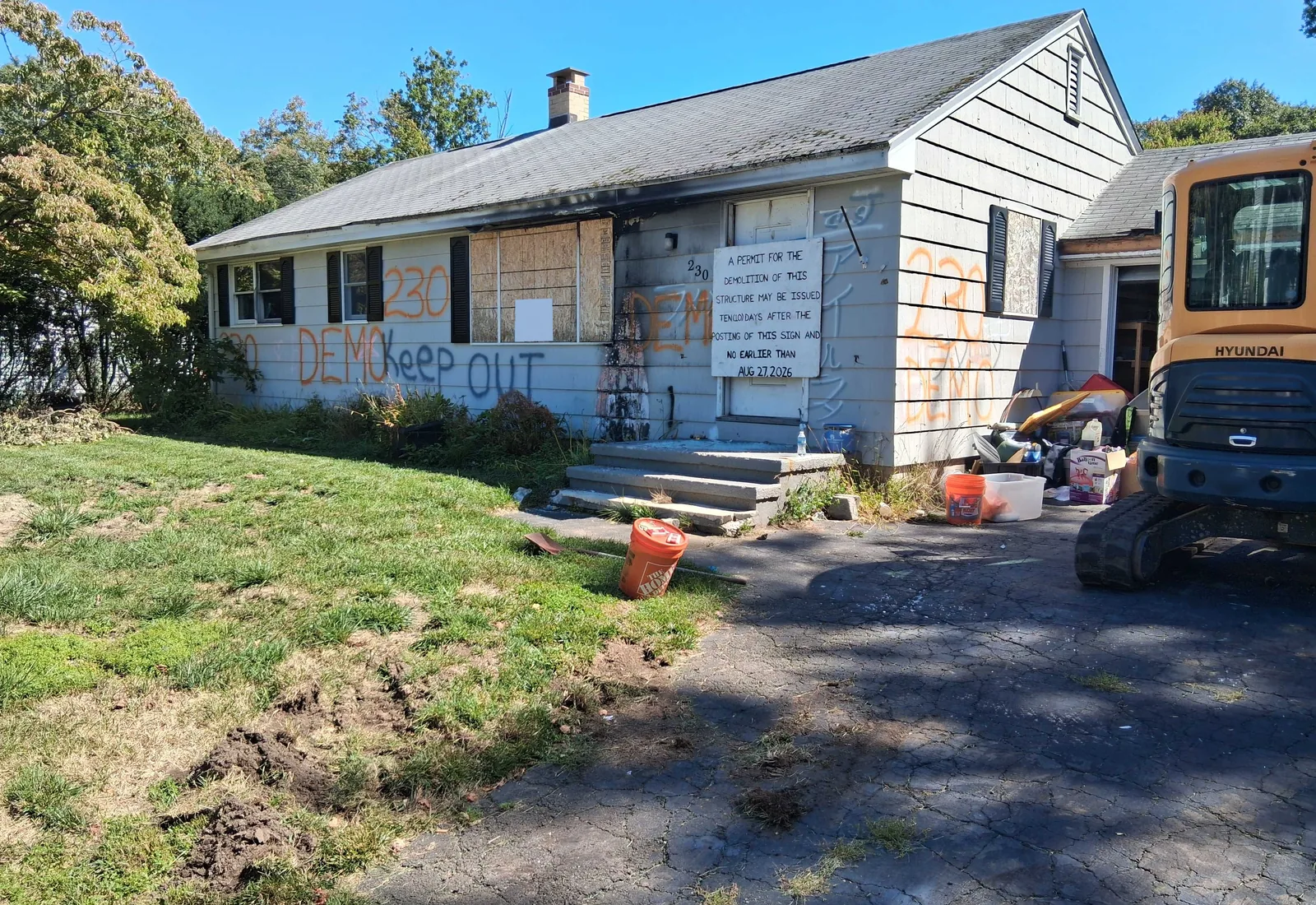
The demolition permit comes from the building official in the town where the house sits, not from the state. The town wants written confirmation from the utilities that service has been cut off. It also has you notify the abutting property owners by certified mail.
Connecticut adds a demolition notification to the state Department of Public Health before a teardown. The rule calls for at least ten days of notice. The form asks whether a licensed asbestos inspector looked at the building first. If asbestos is found, a licensed abatement contractor takes it out first.
Some Fairfield County towns hold a demolition permit for a waiting period first. State law lets a town set that delay by ordinance, up to 180 days. In Monroe it runs 180 days, with notice to the Historic District Commission, the Town Historian and the Historical Society. Which buildings get caught is set by each town, so we check yours early.
How a residential demolition job runs
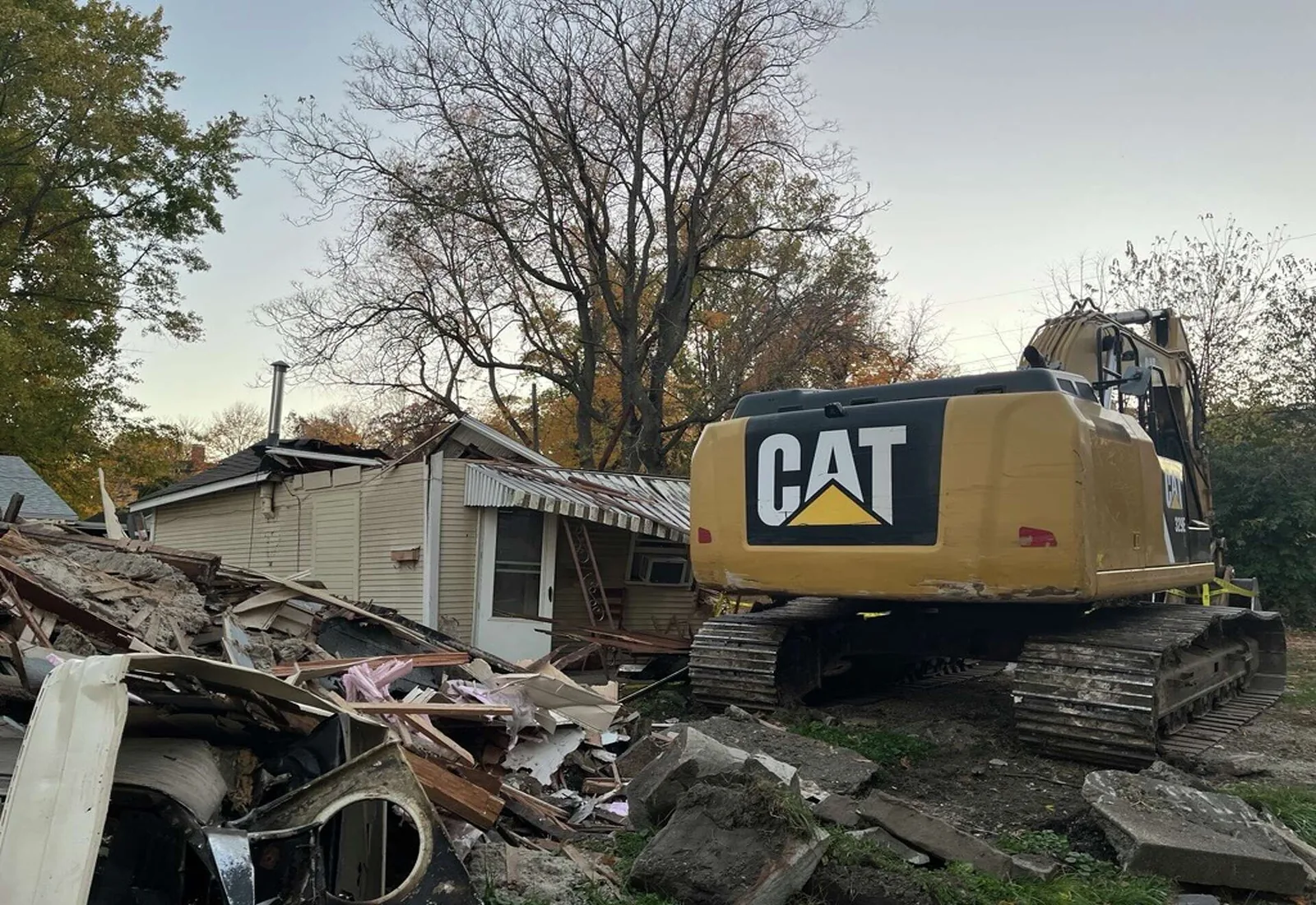
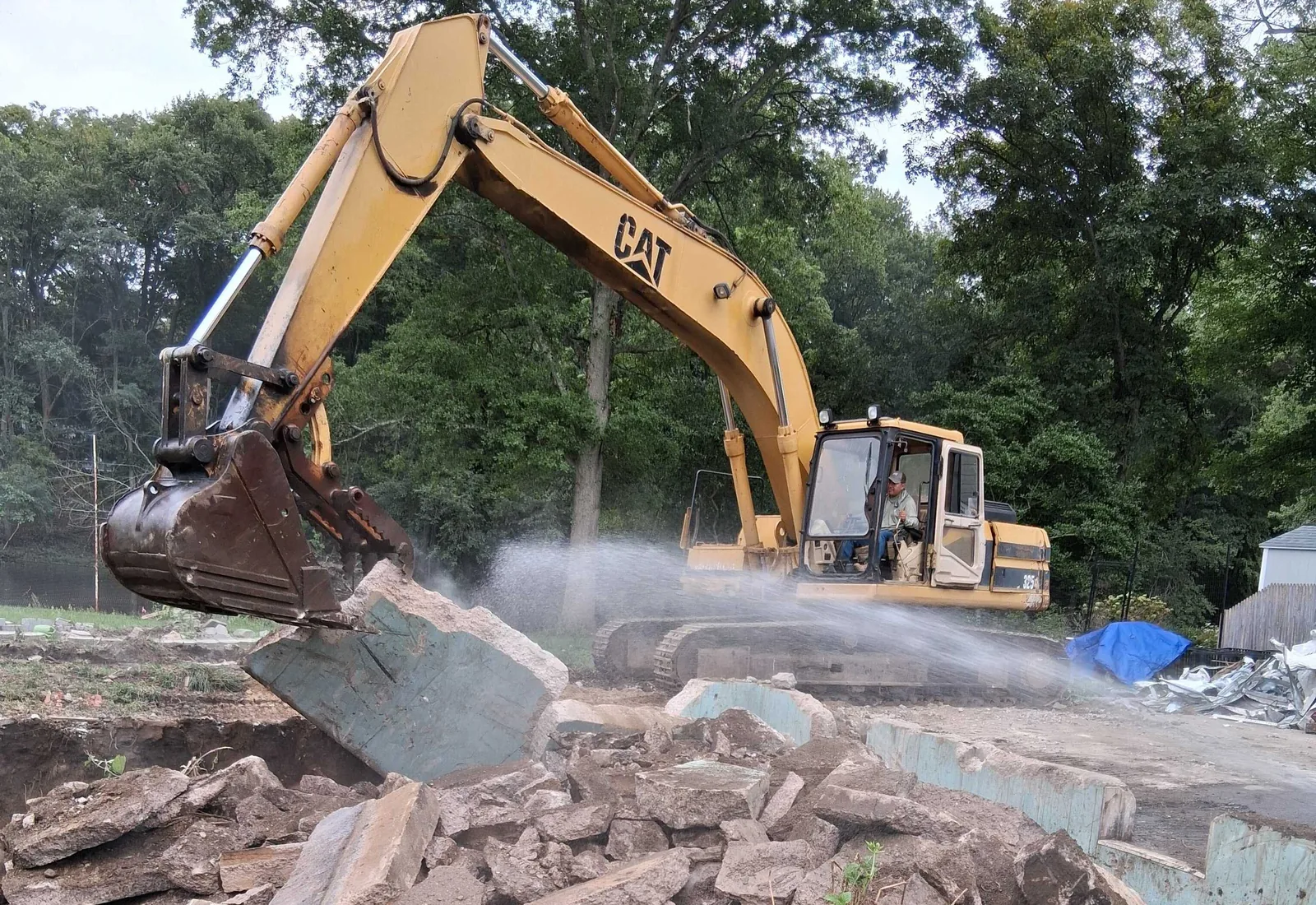
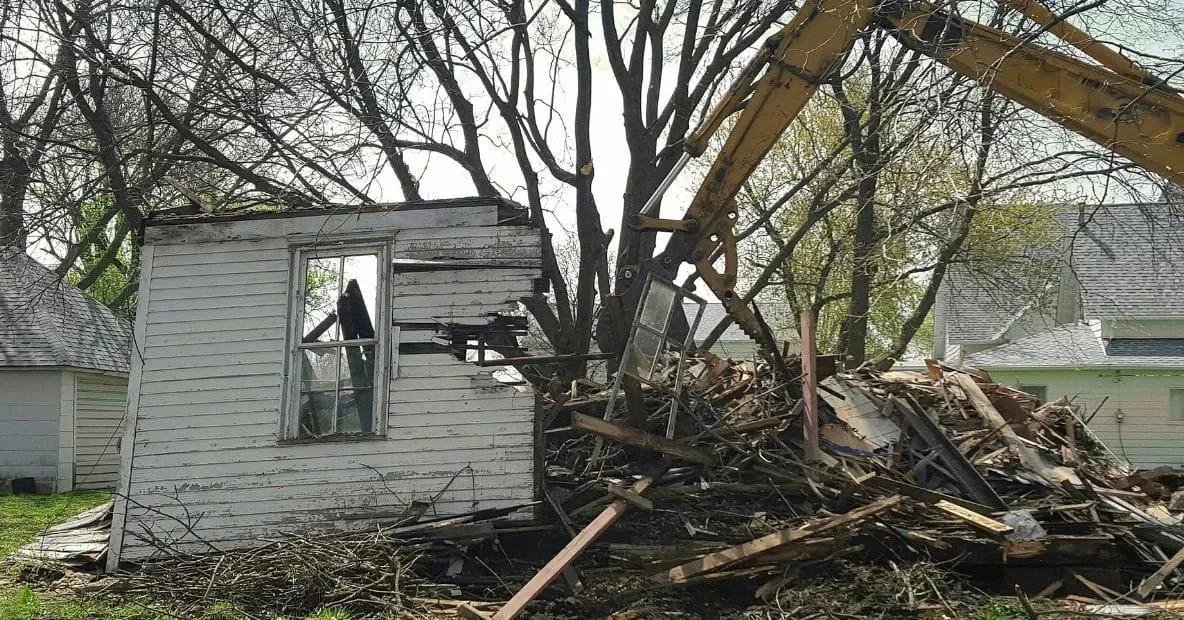
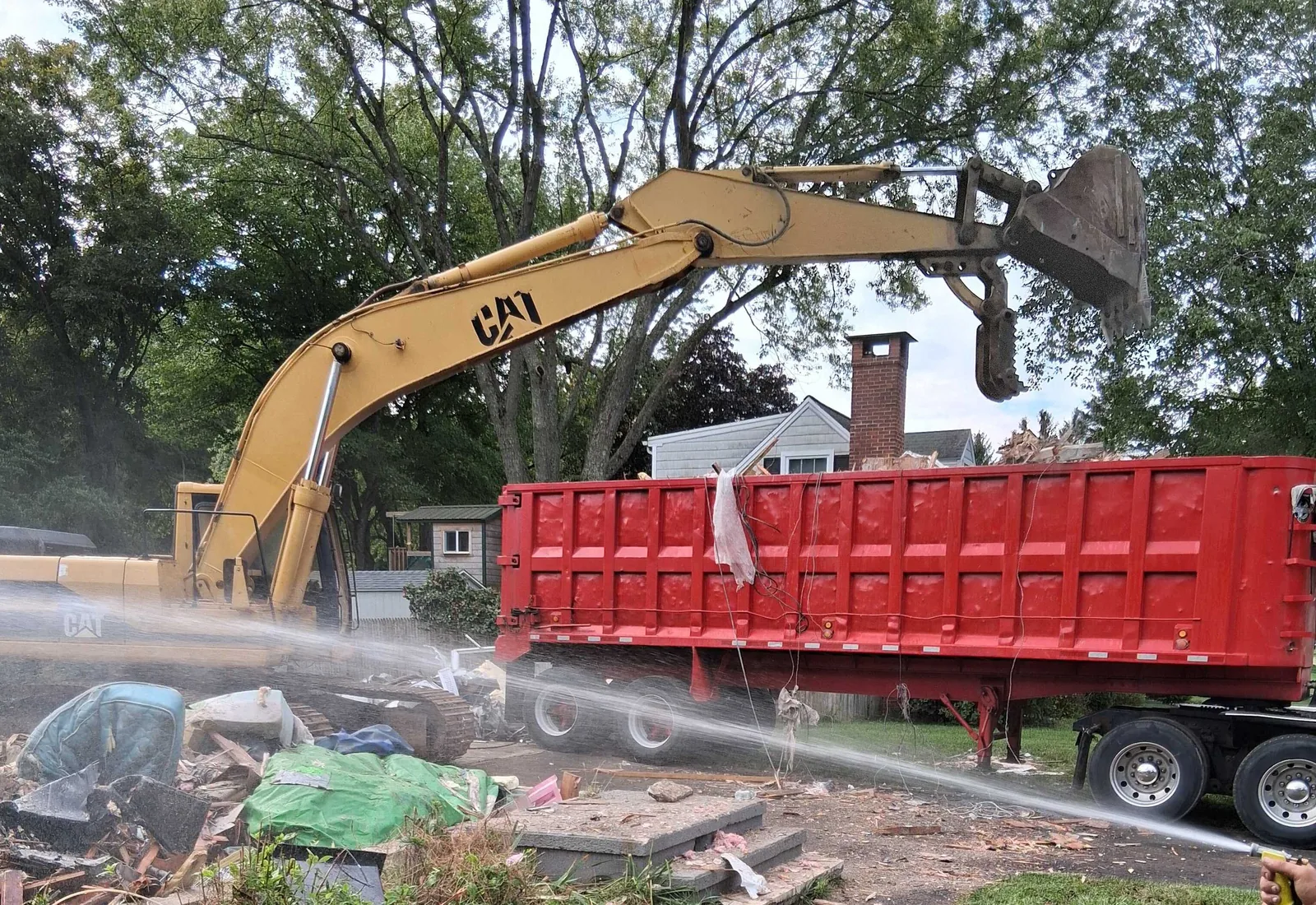
Once the paperwork is clear and the utilities are cut off, the machines come in. An excavator works the house down in sections rather than all at once. The material gets wet down as it comes apart. The state rule calls for that, and it keeps the dust down.
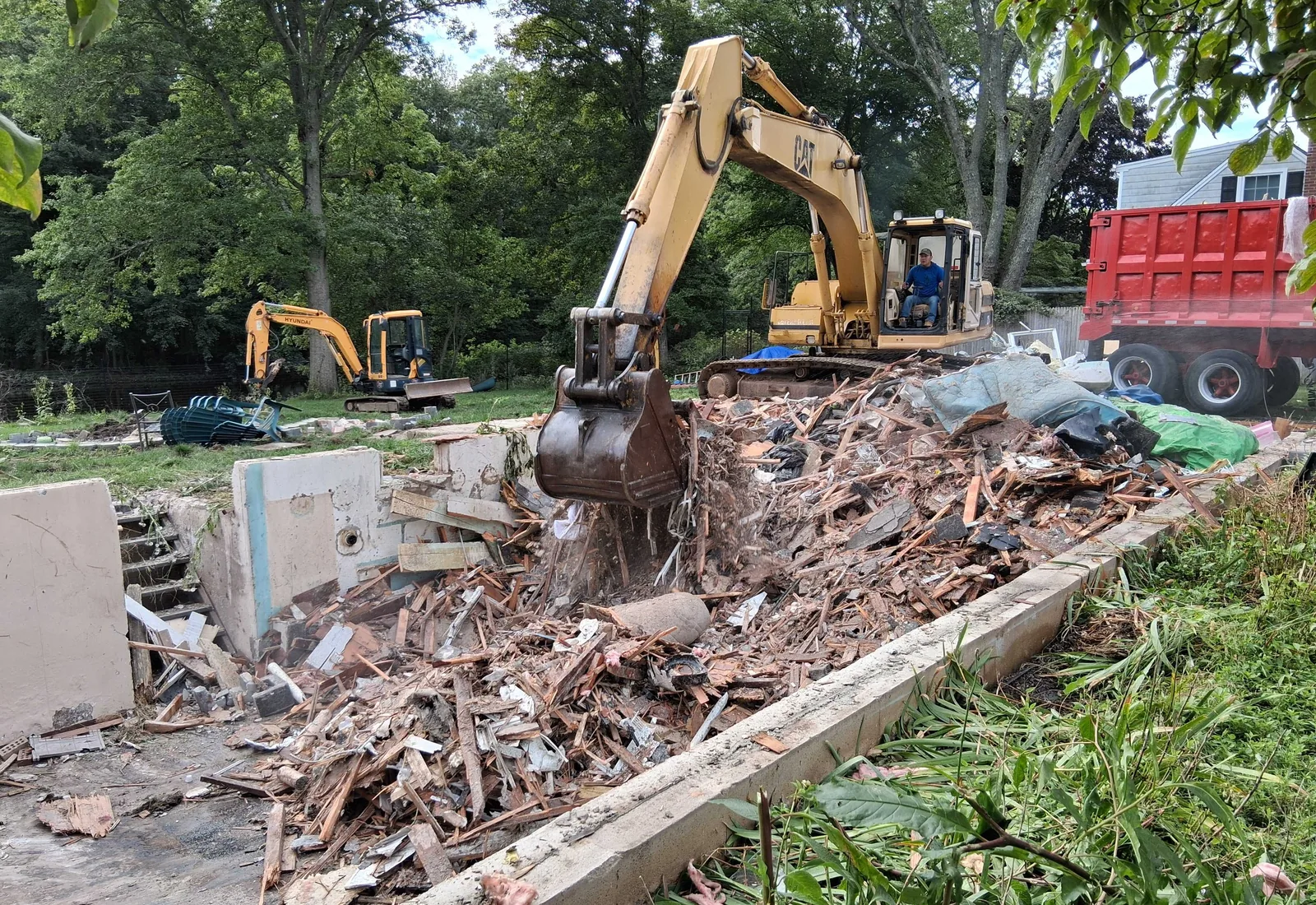
Connecticut treats a house that comes down as bulky waste, so the debris goes to a permitted facility. Concrete, metal and wood are the materials that get recovered. Treated wood, like an old deck or a sill, cannot be burned or buried on site.
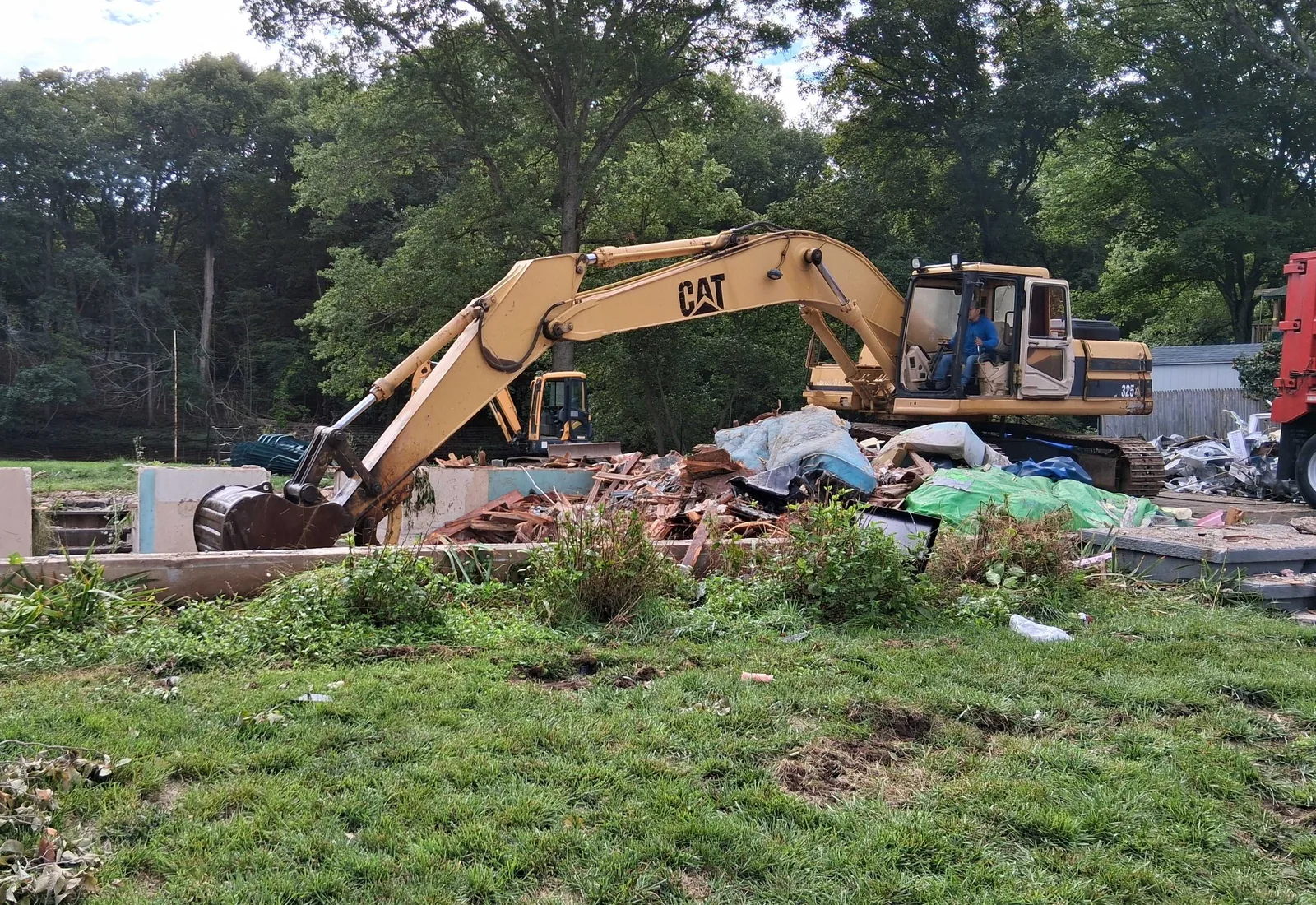
The foundation comes out after the house is down. Older Connecticut houses often sit on fieldstone or block, which all has to be dug out and trucked off. The state rule says the cellar hole is filled back to grade and the debris leaves the property. If a new house is going up on the same spot, the building official can waive that.
Tear downs and rebuilds across Fairfield County
The housing stock here is old. Census figures put the median year built in Fairfield County at 1965. About seven in ten homes went up before 1980. On a lot worth more than the house standing on it, taking the house down is often the move.
A teardown for a rebuild is a different job than clearing a lot for good. The builder needs the ground left the way the plan calls for. After the house is gone we can stay on for digging the new foundation, the backfill and the grades.
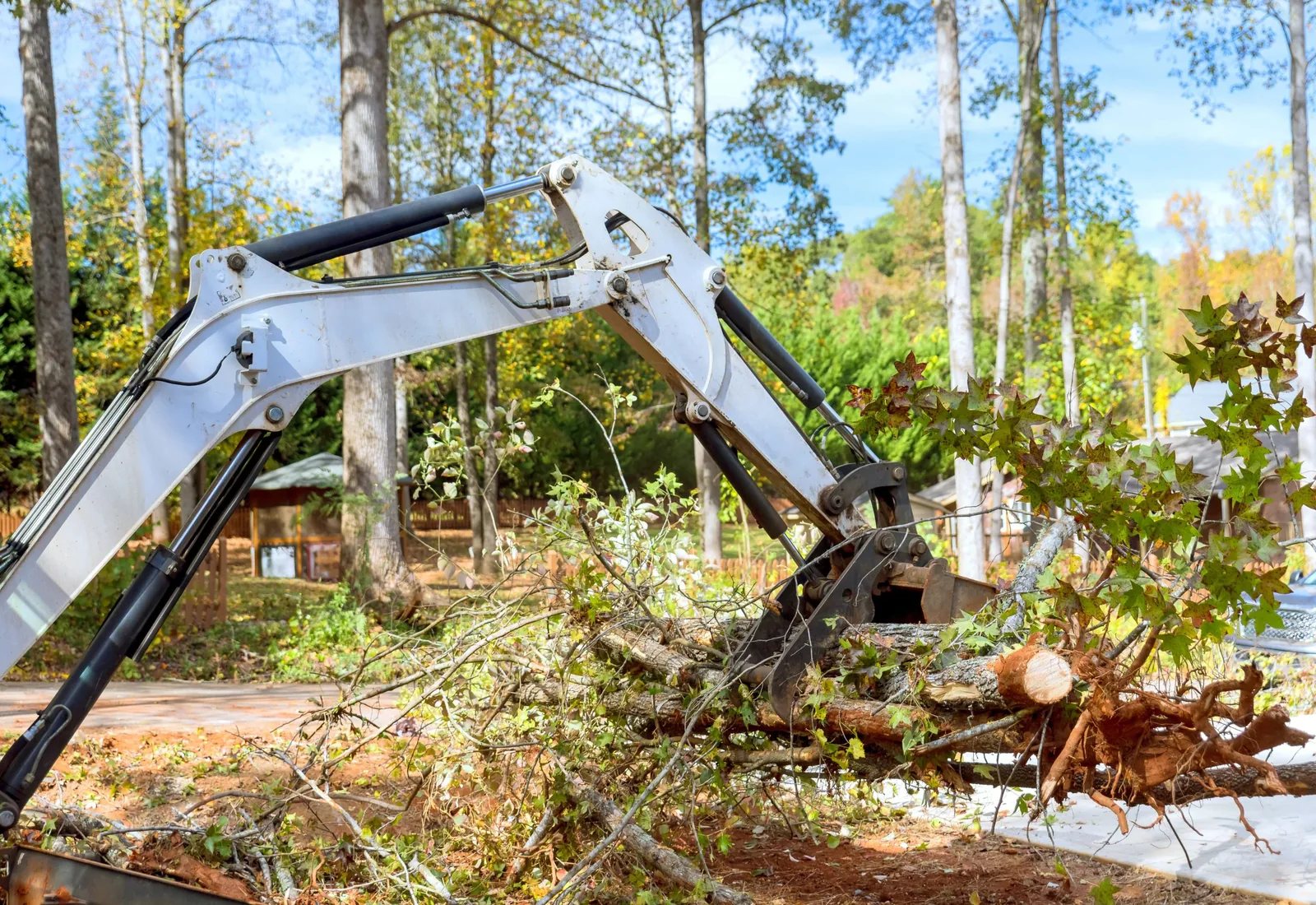
Some lots need more than the house taken off. Woods to clear, a driveway to cut in and utilities to run all fall under site work. That can run with the teardown. One contractor from the teardown to the final grade keeps the schedule in one place.
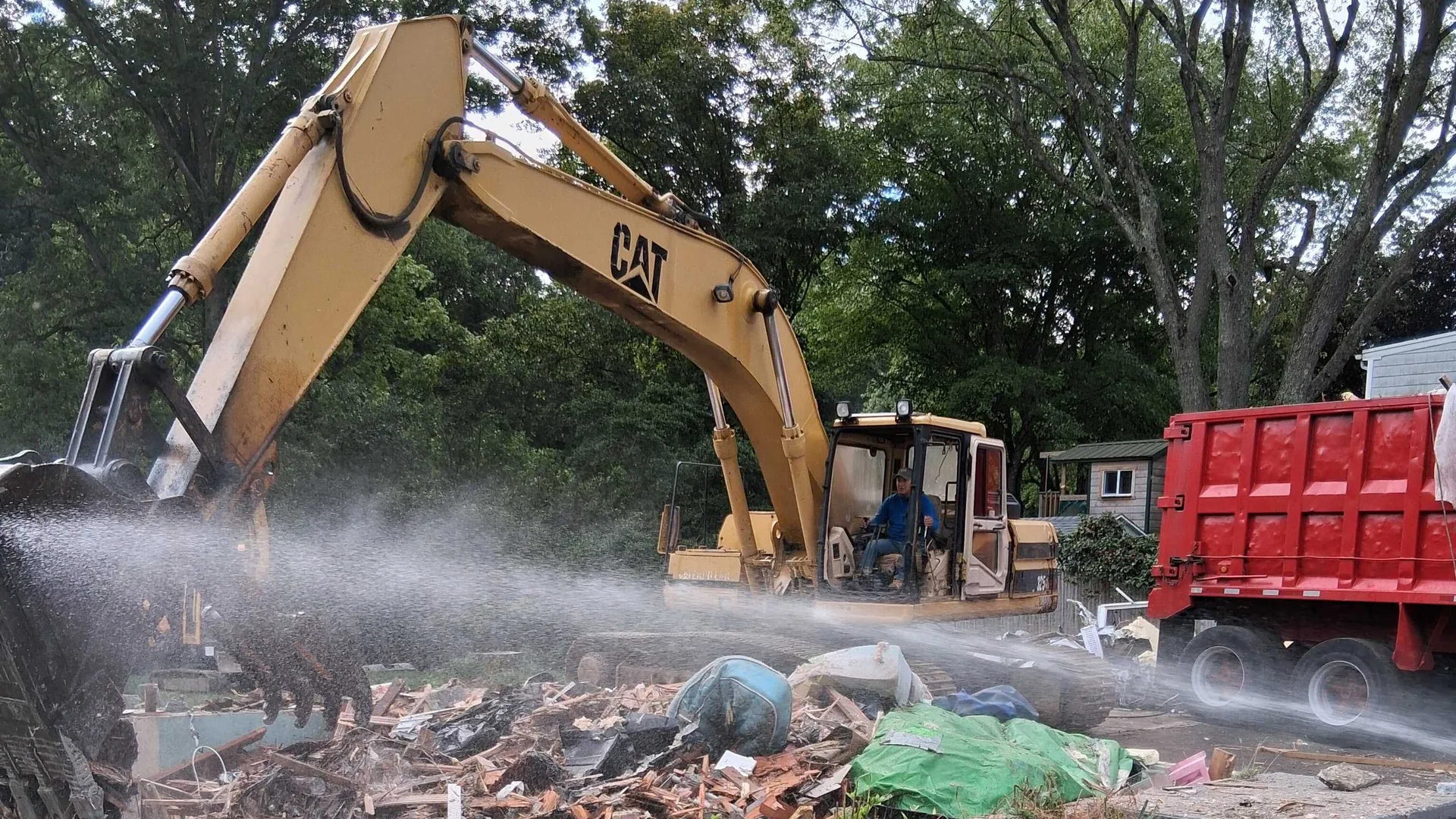
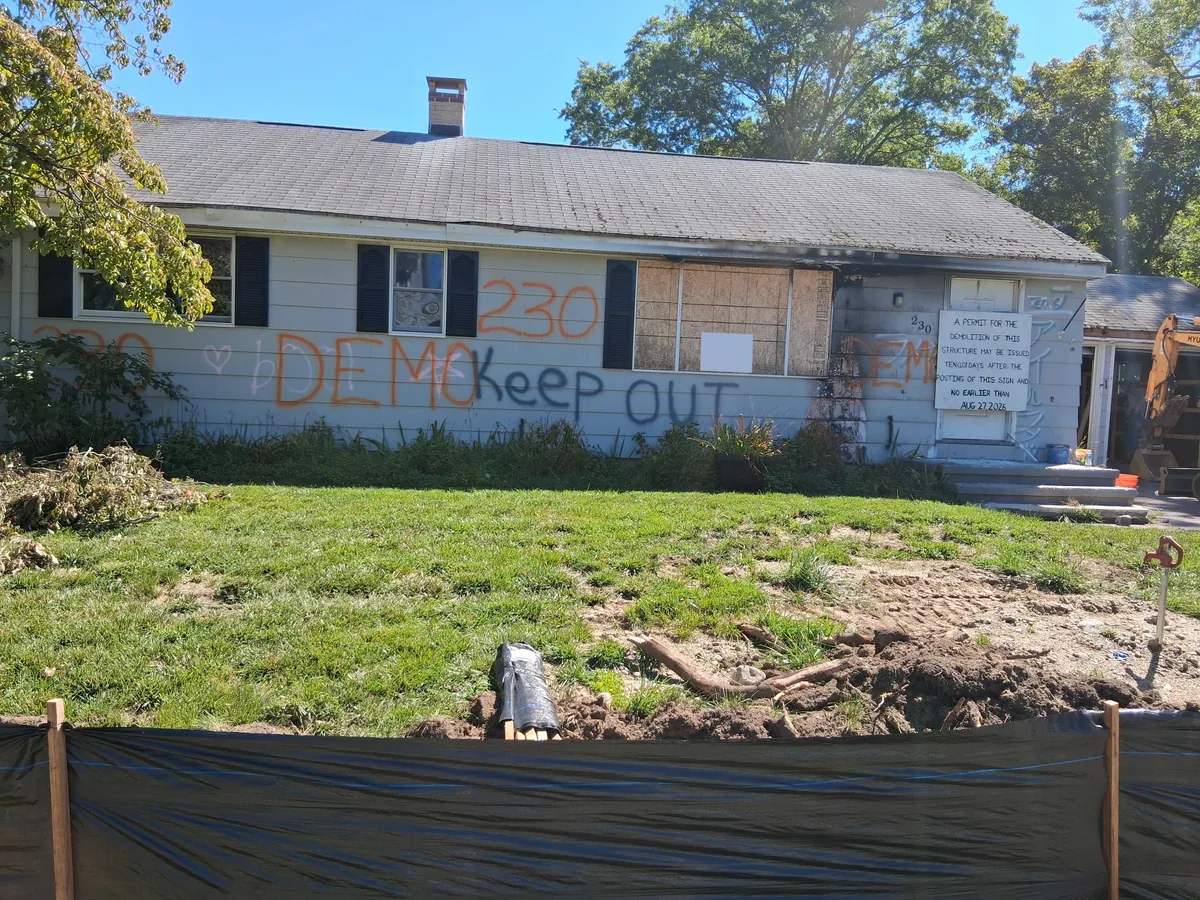 Before
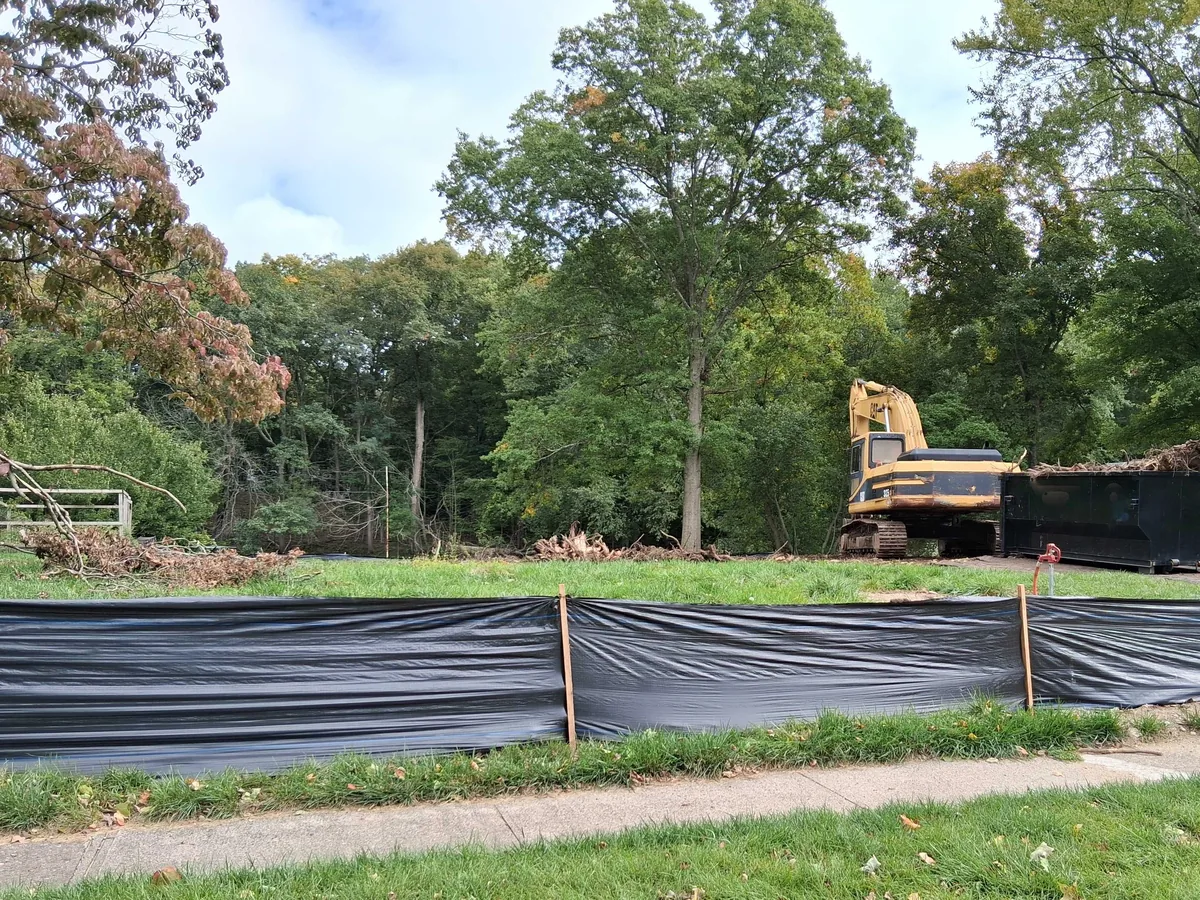 After