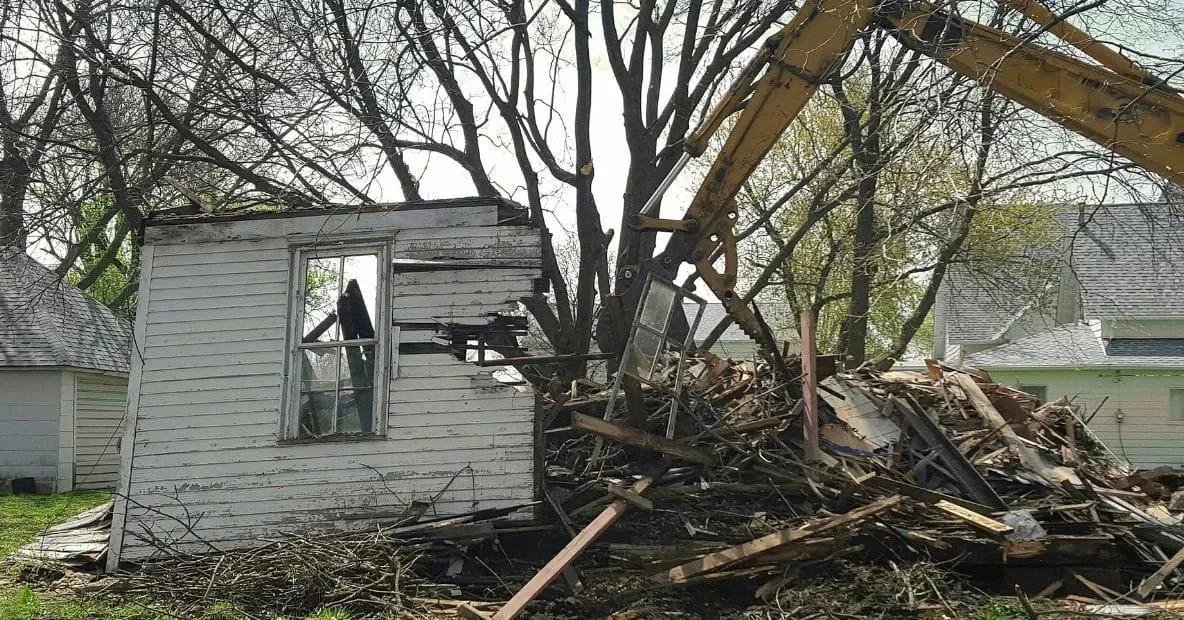
How Much Does It Cost to Tear Down a Garage, Barn or Shed in Connecticut?
A national cost guide puts garage demolition at $1,600 to $6,000, with a national average of $3,500. A guide that publishes Connecticut city figures lists a one to two car garage at $2,800 to $4,600. The same national guide puts a shed at $500 to $3,500 and a barn at $1,200 to $25,000.
Those are market numbers, not our price list. All Star Wrecking does garage, barn and shed demolition across Fairfield County. We price each job after we look at the site. In Connecticut, the number moves with the building itself and with what your town asks for.
What do the published numbers say?
Guides average the whole country. Read each row as a starting point.
| What is coming down | Published range | Kind of source |
|---|---|---|
| Garage, typical range | $1,600 to $6,000 (average $3,500) | National cost guide |
| Detached garage, 24 by 24 feet | $2,300 to $3,450 | National cost guide |
| Attached garage, 24 by 24 feet | $3,500 to $4,600 | National cost guide |
| Garage, widest published spread | $800 to $10,000 | National cost guide |
| One to two car garage | $2,800 to $4,600 | Guide with Connecticut city figures |
| Shed | $500 to $3,500 | National cost guide |
| Barn | $1,200 to $25,000 | National cost guide |
| Concrete slab under a garage | Adds up to $1,500 | National cost guide |
| Asbestos or lead paint disposal | Adds $400 to $5,000 | National cost guide |
| Demolition debris, by weight | $110 a ton, resident rate | One Connecticut town’s transfer station schedule |
How much do size and materials change the price?
Size drives most of it. The national guide averages $4 to $8 a square foot to demolish a garage. A 12 by 20 foot garage runs $960 to $1,920 in that guide. A 36 by 24 foot garage runs $3,455 to $6,910.
The walls come next. For a 24 by 24 foot garage, the guide lists wood at $1,500 to $3,500. Concrete runs $2,500 to $6,000, and brick runs highest at $4,500 to $7,000. By the square foot, the guide runs from $2 for an old, run-down garage to $15 for brick or concrete.
Does an attached garage cost more than a detached one?
It does in the published numbers. For a 24 by 24 foot garage, the national guide lists $2,300 to $3,450 detached and $3,500 to $4,600 attached. An attached garage shares a wall with the house. The guide says that wall takes extra care, and extra time adds to the cost.
If the house is coming down too, that is house demolition. We cover what a house teardown costs in Connecticut in a separate post.
What is under the building, and does it come out too?
The national guide says a concrete slab foundation can add up to $1,500 to a garage teardown. Breaking out the slab and footings and hauling them off is concrete removal.
Depth matters too. Connecticut’s building code puts the frost line at 42 inches. The code exempts a small, light-frame outbuilding of 600 square feet or less, with a low eave, from frost protection. So a shed may sit on a thin slab, while a bigger garage can have footings below the frost line.
Whatever was under the building, state law says an opened hole gets filled to grade. The excess material and debris come off the property.
Why does barn demolition cost vary so much?
The national guide puts barn demolition at $1,200 to $25,000. A UConn home and garden article says Connecticut barn foundations were typically stone, normally with no mortar. It adds that New England barns are usually bank barns, built into the side of a hill. That stone, and the hill around it, can add hours once the frame is down.
An old barn can also meet a town demolition delay. A statewide preservation group says delay rules buy time to save historic structures. Typically, the town first decides whether the building is architecturally significant. Your town decides which buildings its delay catches.
Does asbestos or lead paint change the price?
It can, on an older building. Connecticut’s environmental agency lists siding and roofing among the materials that may contain asbestos. If the building is structurally sound, the state wants that material taken out before demolition.
A licensed asbestos contractor handles abatement over 3 linear feet or 3 square feet. That work comes before the demolition. State guidance also says lead paint waste has to be checked to see whether it counts as hazardous waste. The national guide adds $400 to $5,000 when asbestos or lead paint needs safe disposal.
What has to happen before a garage or barn comes down?
Connecticut law says no one may demolish any building or structure without a permit from the town building official. That covers a shed, so ask your building department before even a small one comes down.
Every public utility with a service connection has to certify that it has severed the connection and service. If the garage or barn has its own electric service, plan on that cut before the permit. A line run from the house is the owner’s own, and Call Before You Dig does not mark it.
Each adjoining property owner gets notice by registered or certified mail before demolition starts. Some towns also hold the permit for a waiting period, which state law caps at 180 days. Monroe uses the full 180 days, while Danbury and Weston show no delay on the statewide list.
During a delay, state law allows no work toward demolition, asbestos abatement included. We tell you what your town will ask for and line the job up around it.
How do access and disposal move the number?
The excavator needs a way in. A gate or a fence panel can often open one up. A garage tight to a house or a property line goes slower.
The national guide puts a rural garage teardown around $2,000. In a city, it says an attached garage can reach $10,000.
Disposal is billed by weight. One Connecticut town’s transfer station schedule lists demolition debris at $110 a ton. That is a resident rate, not a contractor’s rate, but it shows how weight adds up.
Connecticut counts demolition waste as bulky waste, which goes to a disposal site permitted for it. Concrete and brick fragments count as clean fill instead. Empty the building first, since everything left inside goes to the scale with the rest.
How do you get a real number for your garage, barn or shed?
The real number comes from the building and the site around it. All Star Wrecking is based in Monroe and works across Fairfield County. The building comes down with an excavator, and the debris is hauled away so the site is left flat.
We look at the site first, and the estimate is free and in writing. Call (412) 944-9931, or read more about our garage, barn and shed demolition work.