How Much Does Stump Removal Cost in Connecticut?
National cost guides put stump removal at about $175 to $525 per stump, with a national average of $330. That is the price to have the stump dug out, roots and all. Grinding the stump down instead runs about $131 to $450. The same guides also price by trunk size, at about $2 to $5 per diameter inch.
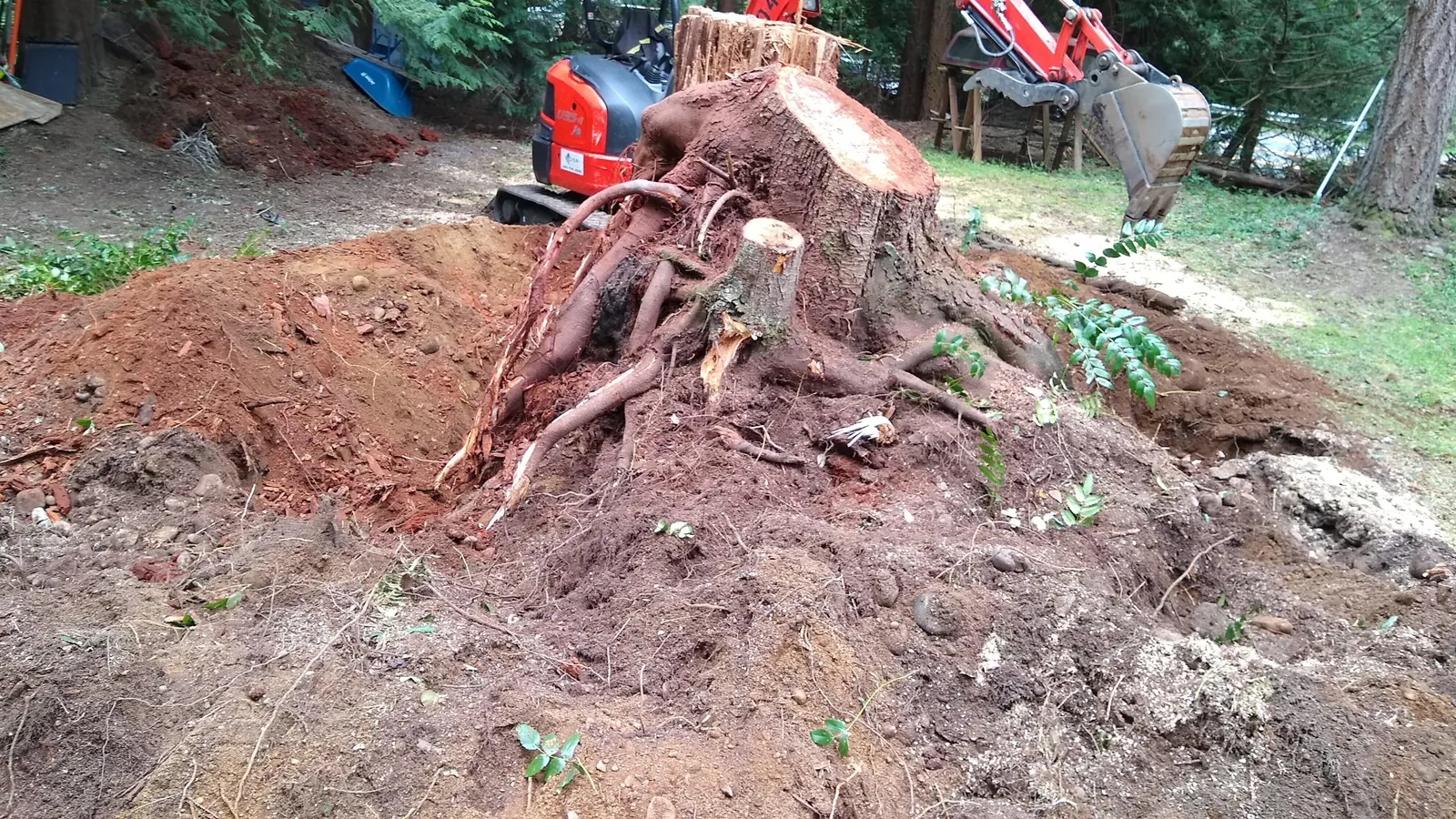
Those are market numbers from national cost guides, not our price list. All Star Wrecking does stump removal with an excavator, so the whole stump comes out and the hole gets filled. What a Connecticut job costs depends on the stump, the ground around it and where the stump goes next.
What do national cost guides say stump removal costs?
Stump removal can mean two different jobs, and they carry two prices. Grinding takes the stump down below the surface. Removal digs the stump out of the ground, root ball and all.
| What the guides price | Stump grinding | Stump removal (dug out) |
|---|---|---|
| Typical cost per stump | $131 to $450 | $175 to $525 |
| National average | $272 to $295 | $330 |
| Priced by trunk size | $2 to $5 per diameter inch | $2 to $5 per diameter inch |
| Each added stump | $37 to $70 | $45 to $100 |
| Hauling the chips or the stump away | $2 to $3 per inch | $2 to $3 per inch |
Size drives most of it. One guide puts a 6 inch stump at about $45 to $70 to remove. A 48 inch stump runs $420 to $700 in the same guide. A grinding guide adds that many contractors charge a $100 minimum.
Why does digging a stump out cost more than grinding it?
National guides price grinding lower, and one calls it generally the less expensive route. A grinder takes off the stump but leaves the roots, with a bed of wood chips on top. Pulling takes the stump and the whole root system, which is harder and slower work. It also frees the spot, and one guide notes a new tree can go where the stump stood.
The machines differ too. A grinder is small enough to reach a stump against a fence or a walk. An excavator needs room to reach in and swing. So one stump in a finished lawn is usually a job for a stump grinding company. We dig stumps out with an excavator, and we will tell you when grinding fits better.
Does removing a stump yourself cost less?
Not always. One national guide puts the tools to dig a stump out by hand at about $445. That is above the same guide’s $330 average for hiring a pro. A chemical stump remover costs about $155 in supplies, but it takes weeks and can take up to six months. The guide also says chemicals work less well on large stumps with big root systems.
What moves the price of stump removal in Connecticut?
Diameter comes first, since the guides price by the inch. Species comes next. National guides say hardwoods like oak and maple are harder to remove than softwoods like pine. One guide adds $50 to $150 per stump to grind a hardwood. Age plays in too, and that guide says old, rotten stumps take less effort than fresh, solid ones.
Then comes the ground. One guide says a stump in rocky soil is harder to remove and likely costs more. The federal soil survey describes a shallow soil of large extent on Connecticut’s glaciated uplands. It formed in a thin layer of glacial till, with hard bedrock about 10 to 20 inches down. Oaks are among its common trees, and a pulled oak stump can bring stone up in its roots.
Access is next. An excavator needs a clear path in and room to swing. A stump tucked behind a house or a shed takes more planning than one in the open. Stump count matters too. Once the machine is on site, each added stump costs less than the first.
Where do the stumps go once they come out?
A pulled stump has to leave the property. Connecticut does not count a tree stump as clean fill, so it cannot be buried back in its hole. State rules file stumps under land clearing debris, which is bulky waste. Bulky waste goes to a disposal site that holds a permit for it.
Monroe’s posted disposal rules take brush at the town landfill for $7 a cubic yard but say no stumps. One national guide puts hauling a pulled stump away at about $2 to $3 per inch.
Then there is the hole. Pulling a big stump leaves a deep hole that gets filled and packed down, then graded. One national guide says to compact the fill so it does not settle later. On a lawn, topsoil and seed finish the spot, and that is land grading work.
What has to happen before a stump comes out?
In Connecticut, anyone digging with power equipment has to contact Call Before You Dig first. The service is free. The request goes in at least two full days ahead, not counting weekends and holidays. It can go in no more than 30 days ahead. The utilities mark their own lines. A line you own, like one out to a garage, is yours to point out.
Water brings its own rules. Connecticut’s wetlands law counts digging in a wetland or a watercourse as a regulated activity. Wetlands are defined by soil type, so a dry looking corner of the woods can still be one. That work needs a permit from the town inland wetlands agency.
When does a building lot need the stumps pulled?
On a lot being opened for a new house, the stumps come out as the trees come down. That is part of land clearing, and the excavator pulls each stump as it goes.
Pulled stumps matter most under a driveway route or a house footprint. Roots left in the ground rot away slowly, and the ground above them can settle. A driveway or a slab over that spot can sink. With the stumps out, the footprint is ready for foundation excavation, the dig for a new house or an addition.
How do you get a real number for your stumps?
Published ranges are a starting point. The real number comes from the stump count, their size, the ground and the way in. All Star Wrecking is based in Monroe and works across Fairfield County. We look at the site and put the estimate in writing, and estimates are free. Call (412) 944-9931, or read how our excavator stump removal works.