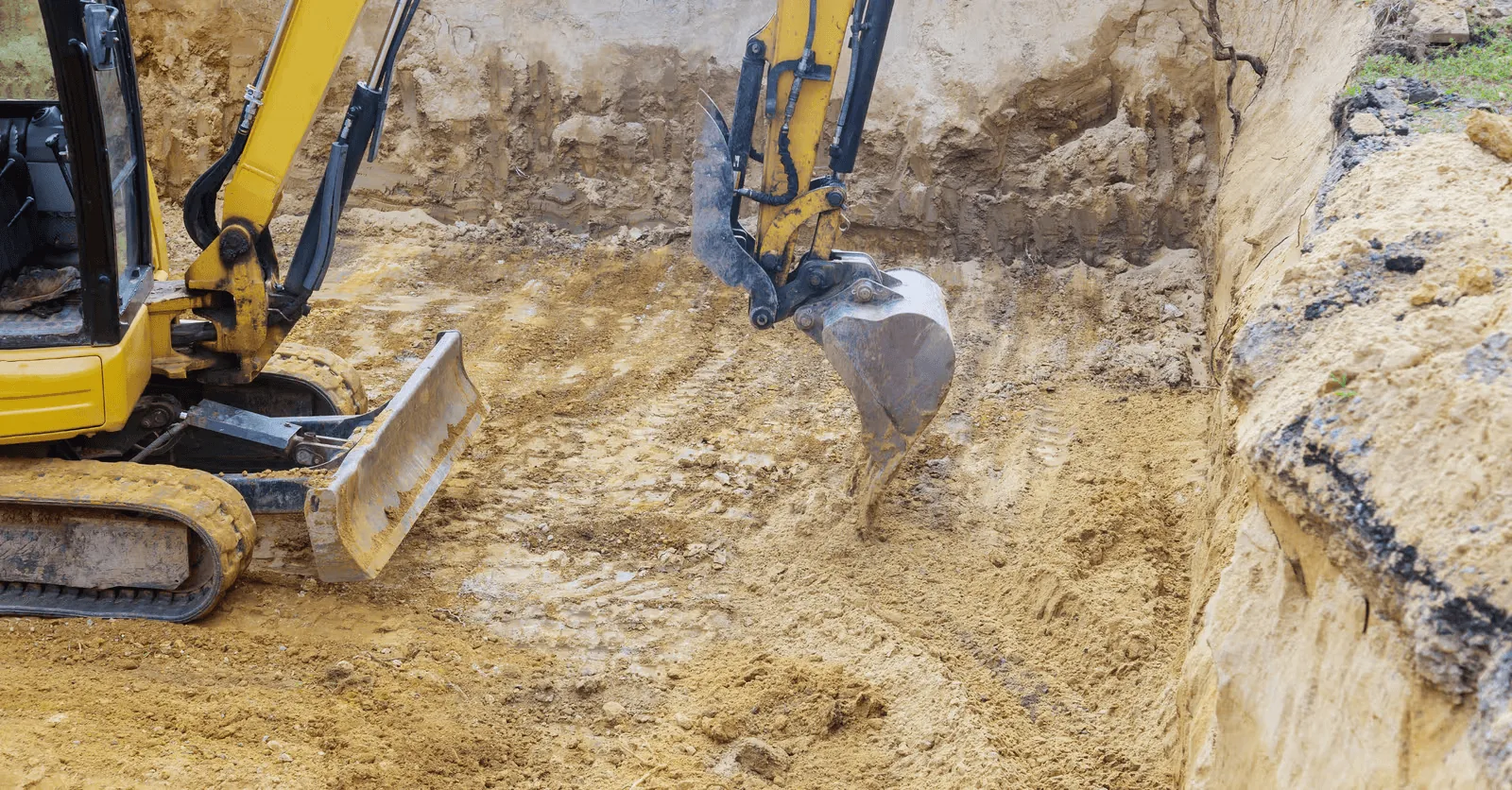
How Much Does Foundation Excavation Cost in Connecticut?
One national cost guide puts basement excavation for a new house at about $10,000 to $30,000. An 8 to 9 foot basement in standard soil runs $10,000 to $20,000 in that guide. Home site excavation in general averages $1,500 to $10,000, depending on the size and depth of the foundation. A basement dig typically takes 2 to 4 days.
By the unit, the same guide prices excavation at $2.50 to $15.00 per cubic yard. An excavator with its operator runs $100 to $300 an hour. Rocky soil or a hard to reach site can push a basement dig to $30,000 to $50,000 or more.
Those are market numbers from national cost guides, not our price list. All Star Wrecking does foundation excavation for new houses and additions as part of our excavation work. This post prices the dig only. The concrete contractor pours the footings and walls and prices that work separately.
What do national cost guides say foundation excavation costs?
One national guide says most excavation contractors charge by the cubic yard or by the whole job. Some charge by the hour for small jobs.
| What the guide prices | Market range |
|---|---|
| Excavation, per cubic yard | $2.50 to $15.00 |
| Rocky soil or ledge that has to be broken up, per cubic yard | $50 to $200 or more |
| Excavator with an operator, per hour | $100 to $300 |
| New home site excavation | $1,500 to $10,000 |
| Basement 8 to 9 feet, standard soil | $10,000 to $20,000 |
| Basement 10 to 12 feet, standard soil | $20,000 to $30,000 |
| Basement 8 to 12 feet, difficult or rocky soil | $30,000 to $50,000 or more |
| Moving dirt off the site, per cubic yard | $140 to $230 |
| Added backfill or fill dirt, per cubic yard | $5 to $25 |
The guide’s basement figures cover excavation and grading only. They leave out the slab floor and the foundation walls, which the concrete contractor prices. Hourly work carries a minimum too, and the guide says most operators charge at least one day or eight hours.
How deep does a foundation dig go in Connecticut?
Depth is a big driver, because a deeper hole means more soil to move. Connecticut’s building code sets the frost line at 42 inches statewide. Footings usually sit below that line, though the code also allows solid rock and a few other methods. Your plan shows the method and the depth.
A full basement is the deepest dig, with the whole footprint taken down most of a story. A crawlspace needs a shallower hole. A slab often needs little more than a footing trench around the edge. Those footings usually go below the frost line too.
The hole is cut wider than the walls so the foundation crew has room to set forms. In a hole 5 feet deep or more, federal safety rules require a protective system before anyone works in it. On an open dig, that can mean walls sloped back or cut in steps, called benching. The dug soil also has to sit at least 2 feet back from the edge.
Why does ledge change the price so much?
Ledge can turn an ordinary dig into an expensive one. On shallow soils like the Hollis series, the federal soil survey puts hard bedrock about 10 to 20 inches down. A full basement hole goes far deeper than that.
One national guide says costs can jump to $15,000 to $20,000 or more when the excavator hits rock. Big boulders run $50 to $200 per cubic yard to keep on site, or $220 to $250 to haul off.
Rock that has to be broken up or blasted goes to the contractor who does that work. Blasting in Connecticut takes a state explosives license and a written permit from the town fire marshal or the state. The code accepts solid rock as frost protection, so sometimes the plan sets the footings right on the ledge.
What does water in the hole do to the cost?
Water in the hole has to be dealt with before the footings go in. Soils like the Paxton series have a dense hardpan of packed glacial till below the surface. The federal soil survey says water may perch on it from late fall through early spring. So a spring dig can take water on a lot that looks dry, and that costs time on the machine.
How do access and the soil that leaves the site change the price?
An excavator needs a clear way in and room to swing. One national guide says costs rise when the machine has to work around existing structures or in tight spaces. A dig for an addition beside a finished house is a common example. The route also stays off the septic field, since the EPA says not to drive on one.
Topsoil gets stripped first and piled on its own for the yard later. Connecticut counts natural soil and rock as clean fill. So the rest of the spoil can stay on the property for backfill and grading, where the plan allows. Hauling it away costs more, at $140 to $230 per cubic yard in the same guide.
Backfill is the second half of the dig. It waits for the foundation contractor’s go-ahead, once the walls are ready. The soil goes back in around them, and the lot gets a rough grade before land grading finishes it. If the job needs extra fill, the guide puts fill dirt at $5 to $25 per cubic yard. What the grading itself costs is in our land grading cost guide.
What has to happen before a foundation dig in Connecticut?
On a wooded lot, the footprint gets cleared first, with the trees down and the stumps pulled. That is land clearing, and the roots come out so they cannot rot and let the ground settle later.
Connecticut requires a Call Before You Dig request from anyone digging with power equipment. The request goes in at least two full days ahead, not counting weekends and holidays. It can go in no more than 30 days ahead.
Connecticut’s wetlands law counts digging in a wetland or a watercourse as a regulated activity. Towns can also regulate the area around one. Wetlands are set by soil type, so a dry looking lot can still hold one. That work needs a permit from the town inland wetlands agency.
Towns require a soil erosion and sediment control plan when a development disturbs more than half an acre. A single-family house outside a subdivision is exempt from that rule.
How do you get a real number for your foundation dig?
Published ranges are a starting point. The real number comes from the plan, the ground and the way in, plus where the extra soil goes. All Star Wrecking is based in Monroe and digs foundations across Fairfield County. We look at the lot first, and the estimate is free and comes in writing.
The full new-home package, from a wooded lot to a graded yard, is our site work. The trenches for the house’s service lines are our utility trenching work. Call (412) 944-9931, or read how our foundation excavation runs from the corner stakes to the backfill.